

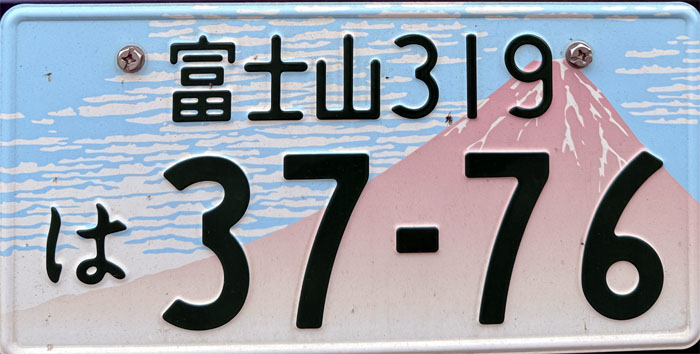
We paid a visit to the land of the rising sun, not to predictably hike Fuji-san but rather do a couple of exploratory activities since we had only so many days to spend.
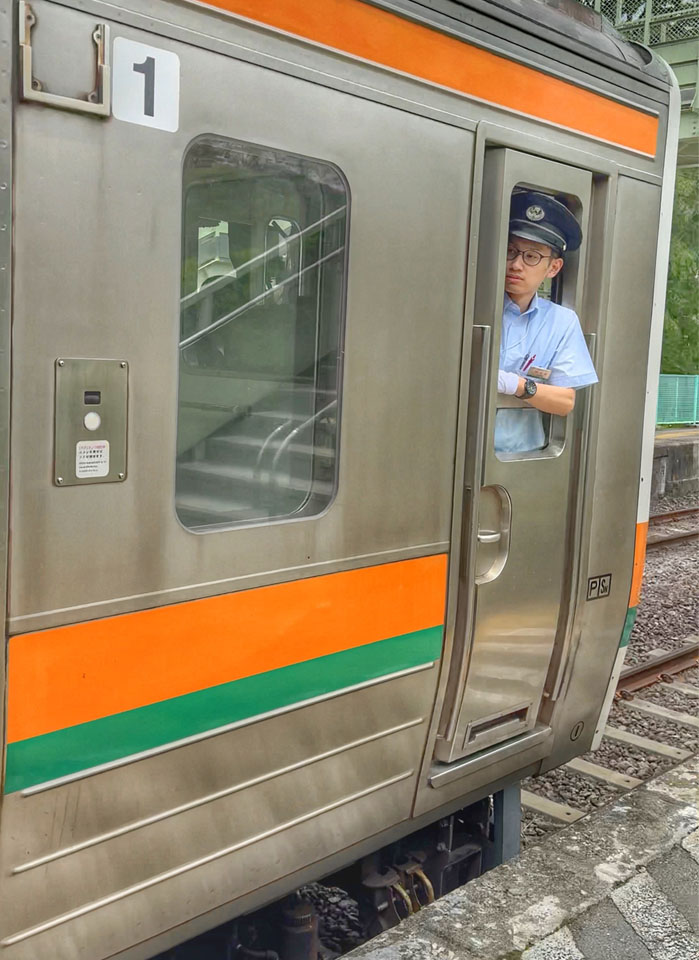
Iwashima
Agatsumakyo Gorge Rail Bike Agattan – May 27, 2025
It took us several connecting trains and roughly three hours to travel from Shinjuku to the town of Higashiagatsuma in Gunma Prefecture. There was nobody at the “station” to take our tickets, so we just dropped it in the “honor” box.
Higashiagatsuma
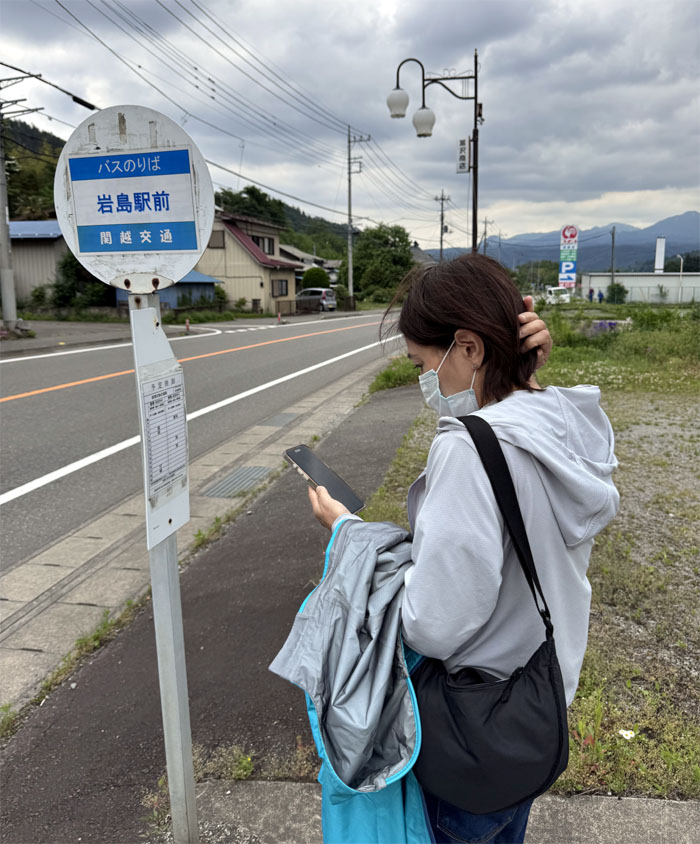
We had to “wake” up the barber at Akagi Barber Shop to find out where the bus stop was. Then we got slightly worried when the bus didn’t show up as listed on the schedule. In the land of punctuality. It showed up 10-15 minutes later as we were thinking of trying to catch a taxi or just to walk the distance to make our reservation time of 1300.
Higashiagatsuma
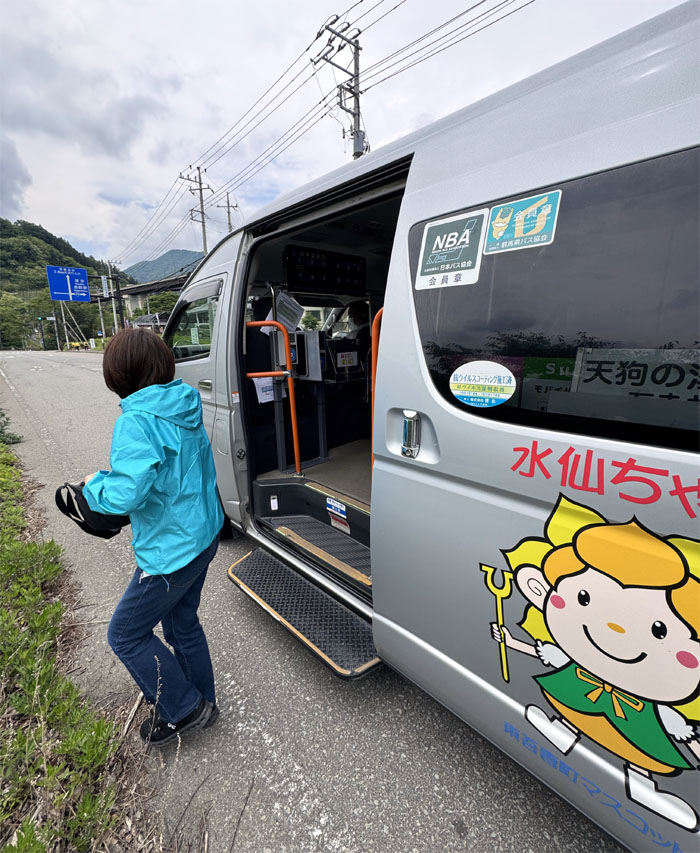
Getting off the “bus” that was adorned with colorful cartoon characters. If you didn’t know any better, one would think Japan is just one big cartoon country.

Agatsumakyo Gorge Rail Bike Agattan
We checked in along with others and picked our colorful hard hats. Safety first. Then we walked a short distance to the departing train platform.
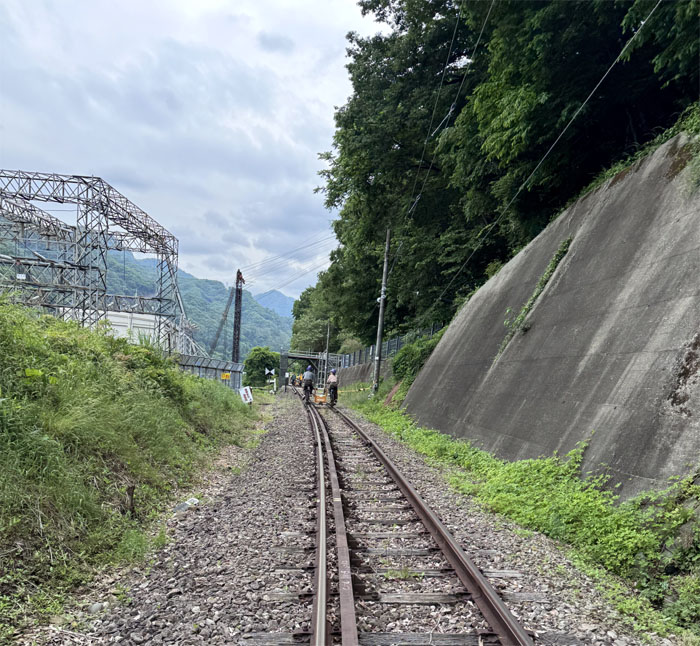
Agatsumakyo Gorge Rail Bike Agattan
Pedaling our way on the re-purposed former JR East Agatsuma Line railway tracks that was shut down due to construction of the nearby Yamba Dam.
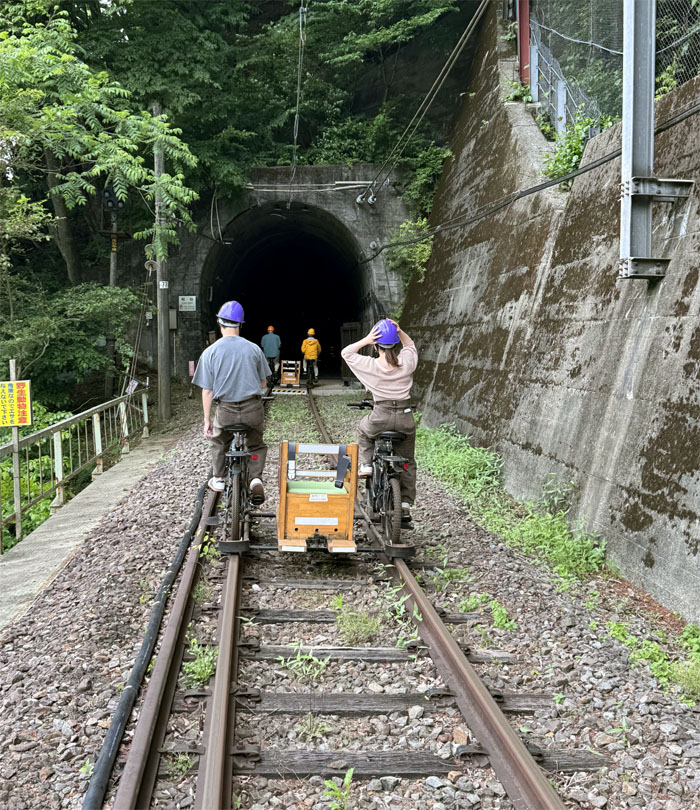
Agatsumakyo Gorge Rail Bike Agattan
Passing through one of several tunnels underneath the mountain.
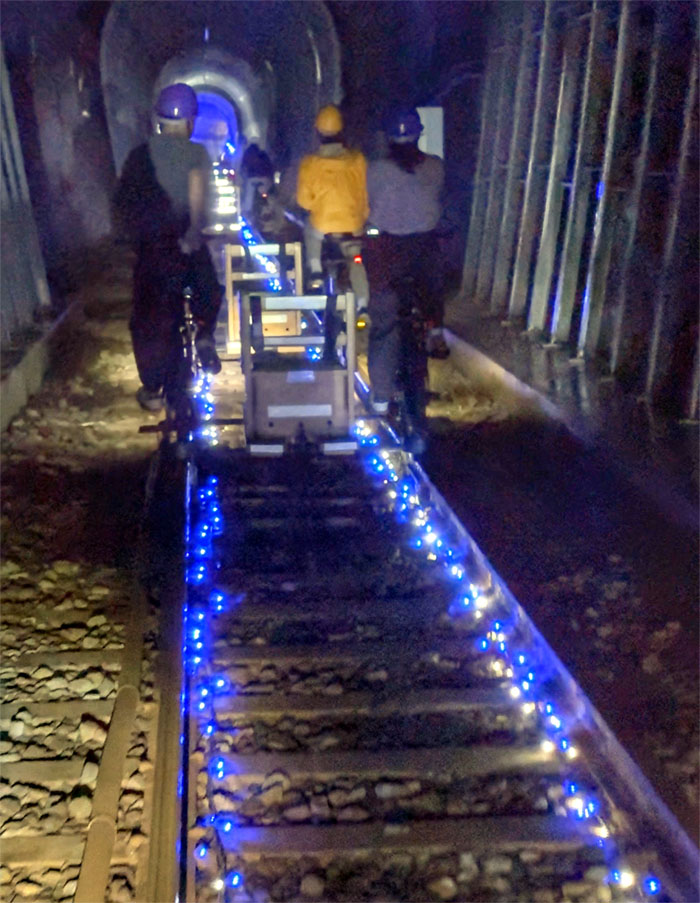
Agatsumakyo Gorge Rail Bike Agattan
This one had Christmas lights illuminating the tunnel.
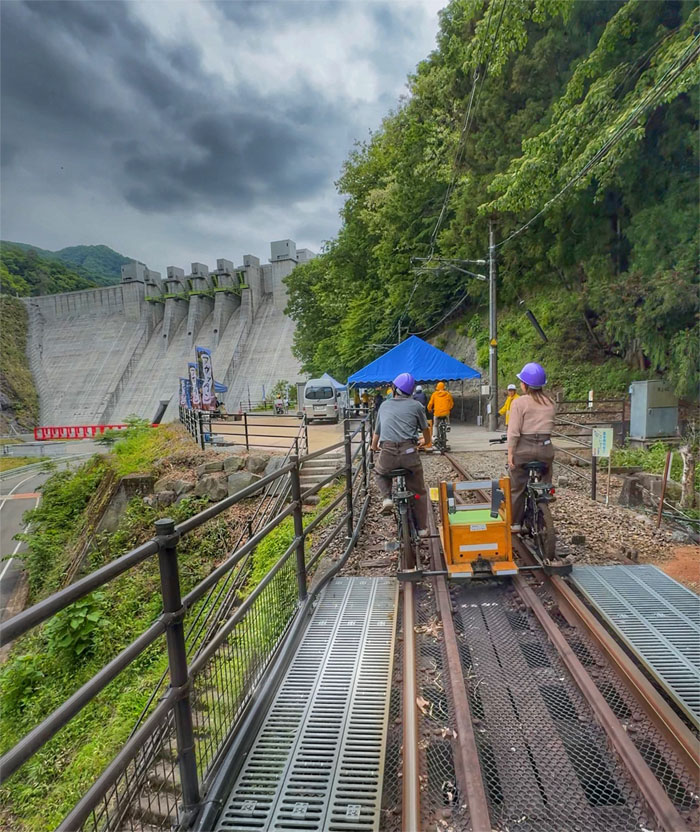
Agatsumakyo Gorge Rail Bike Agattan
Approaching the reason this activity exists in the first place.
Yamba Dam
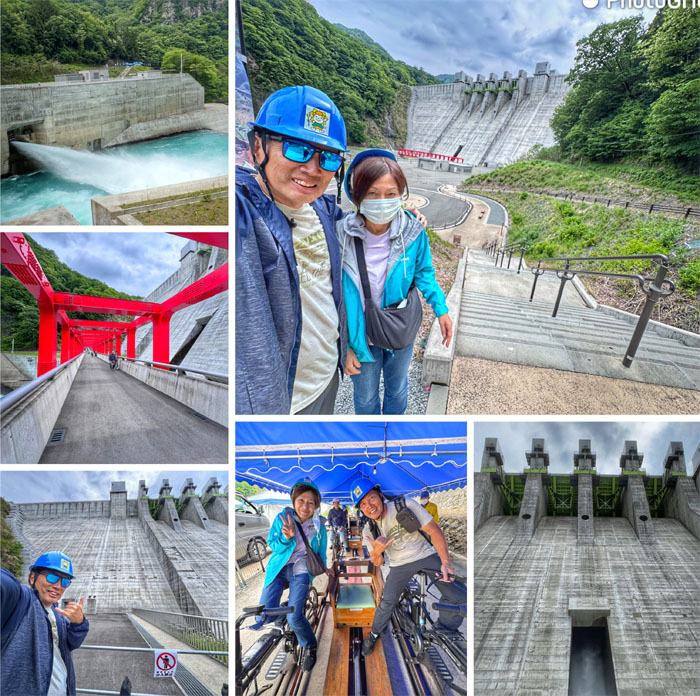
This was the turn around spot for our rail bike cars. Walking around the concrete gravity dam that became operational in 2019, which rises to a height of 116 meters and can store up to 108 million cubic meters of water. It also provides enough power for nearly 12,000 homes. I was unable to fulfill a friends request to climb the “Stairway to Heaven” on the side of the dam. My Japanese may be rusty, but I think entrance is prohibited.
Agatsumakyo Gorge Rail Bike Agattan
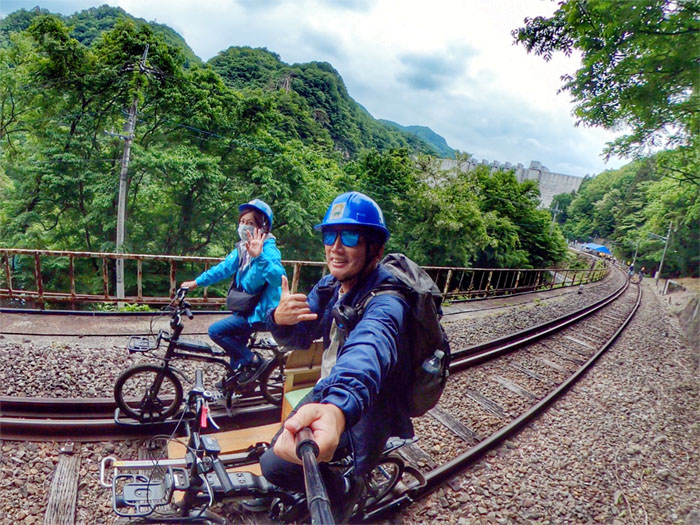
The workers turned the rail bikes around so that we didn’t have to pedal backwards to the train platform.
Agatsumakyo Gorge Rail Bike Agattan
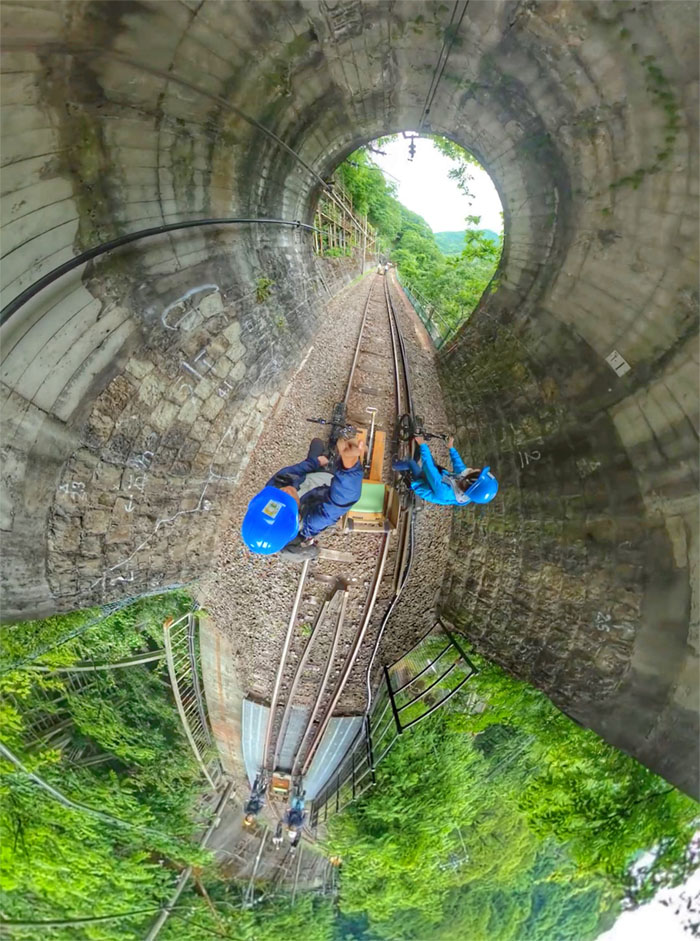
Passing through Tarusawa Tunnel, once known as the shortest in the country.
Agatsumakyo Gorge Rail Bike Agattan
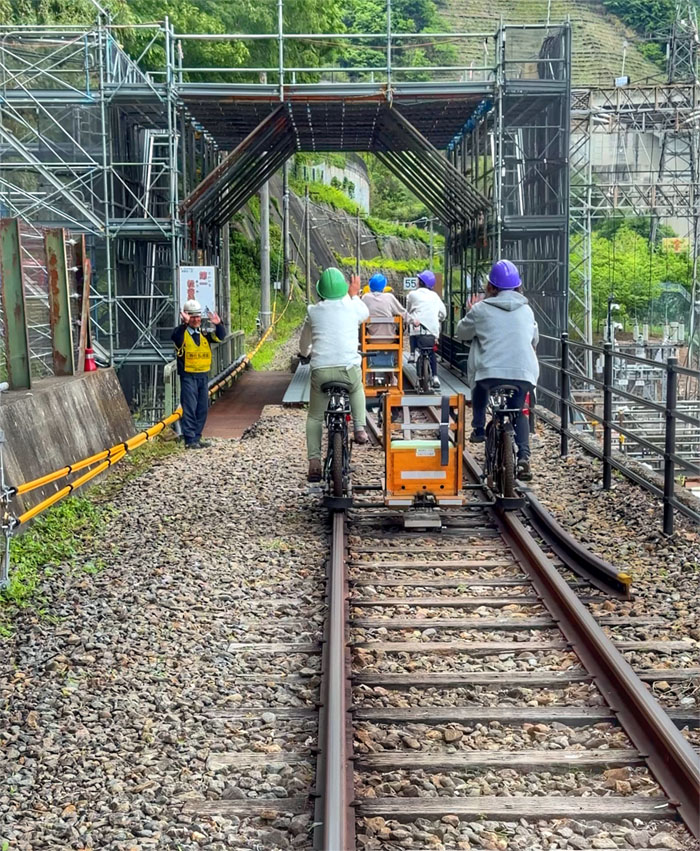
Friendly construction worker waving at us as we rode by on the tracks, making the “gattan” noise as the rail bike contacted the tracks.
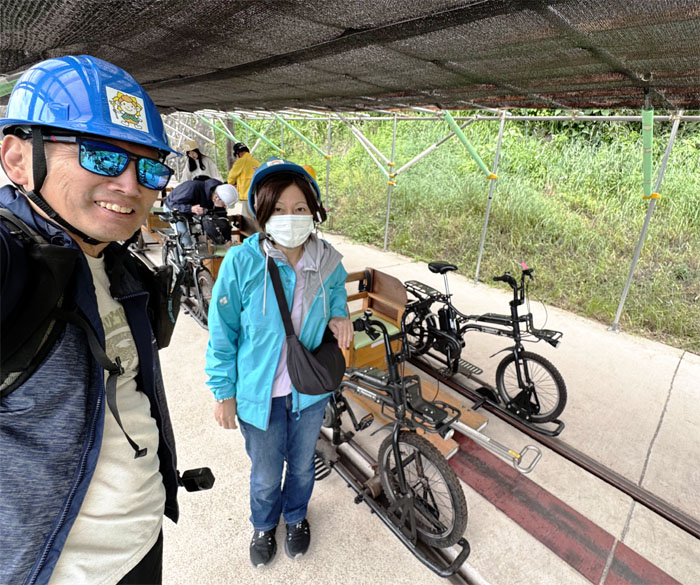
Agatsumakyo Gorge Rail Bike Agattan
We were soon back at the platform after spending roughly one hour round trip on the tracks and a brief exploration of the dam that cost us 5,000 yen for the experience. This ride would be best experienced in the fall when the colors change for eye candy consumption.
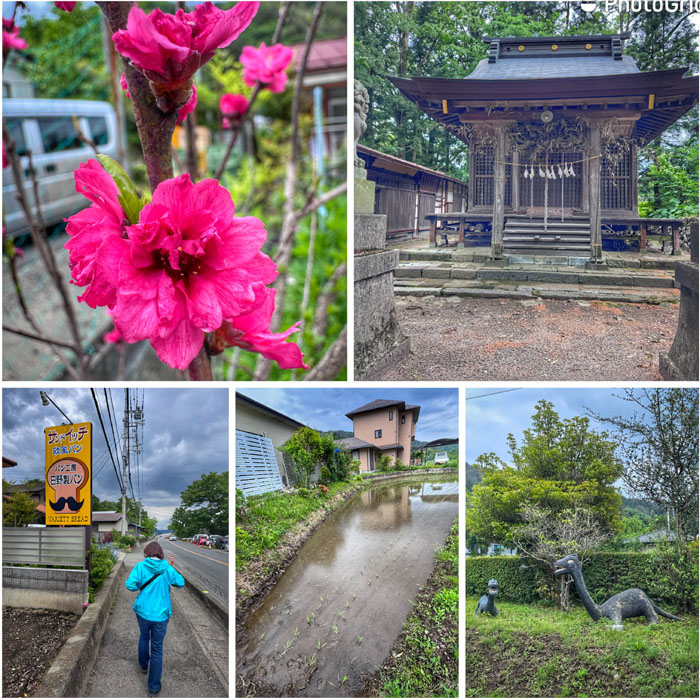
Higashiagatsuma
The bus was not scheduled to come for another two hours and no taxi cabs would come to collect passengers this far out. I guess we are walking back.
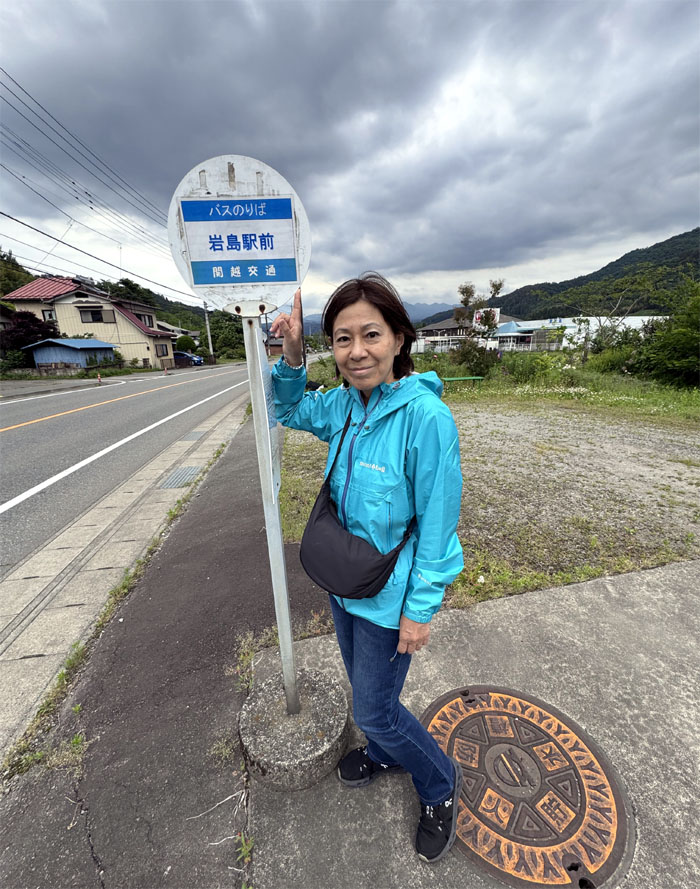
Higashiagatsuma
Back at the bus stop. For the land of convenience machines, we didn’t see not one walking back. We must really be in the country country. Since we had over an hour to wait, we walked to the nearby hardware store where we bought some snacks and drinks.
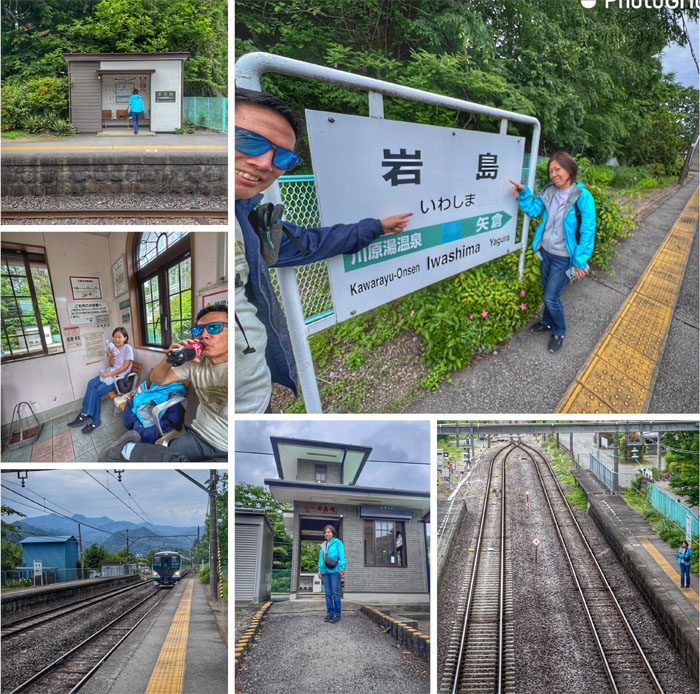
Iwashima
Killing time at the deserted train station before our departure time.

Higashiagatsuma
Making myself comfortable. It’s going to be a long train ride back. We had dinner at Coco’s where I had my usual seafood spaghetti served by a robot.
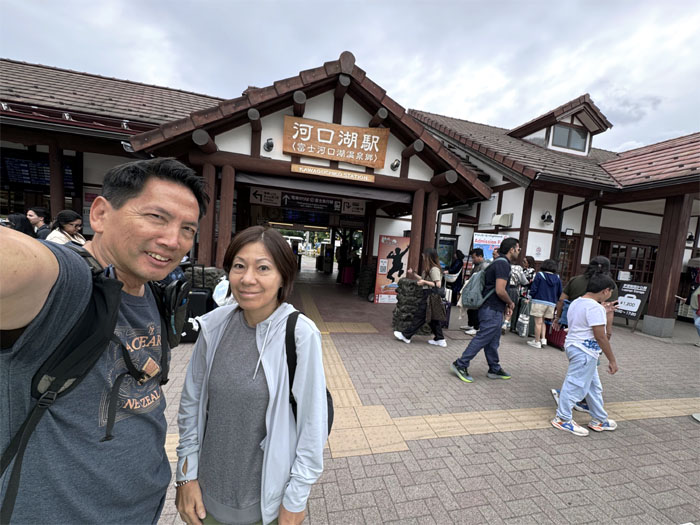
Kawaguchiko Station
Aokigahara – May 29, 2025
It took us only two hours this time to reach the train station in the town of Fujikawaguchiko from Shinjuku. Our local guide, Omori Tadasuke, picked us up at the station along with an Australian couple that were honeymooning in Japan.
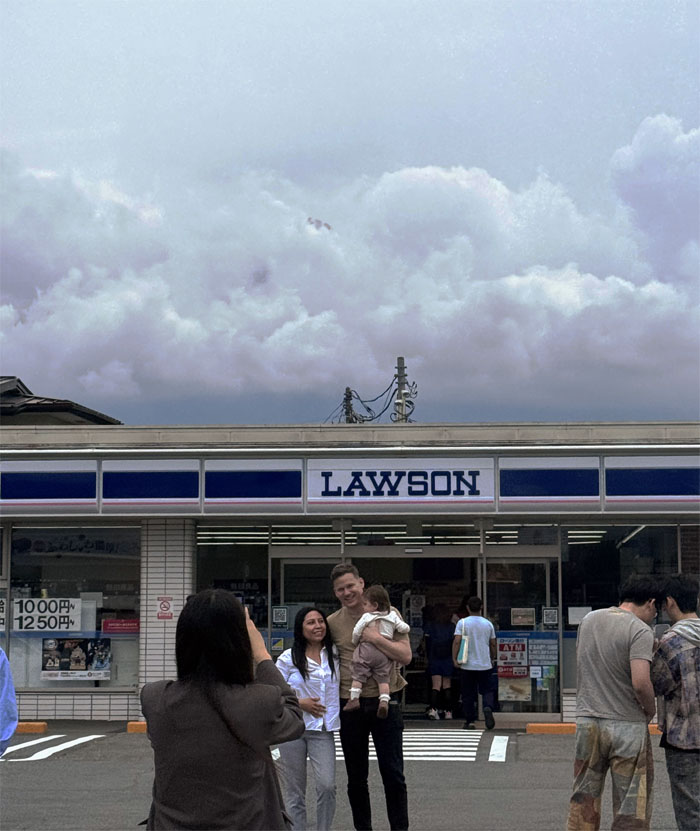
Fujikawaguchiko
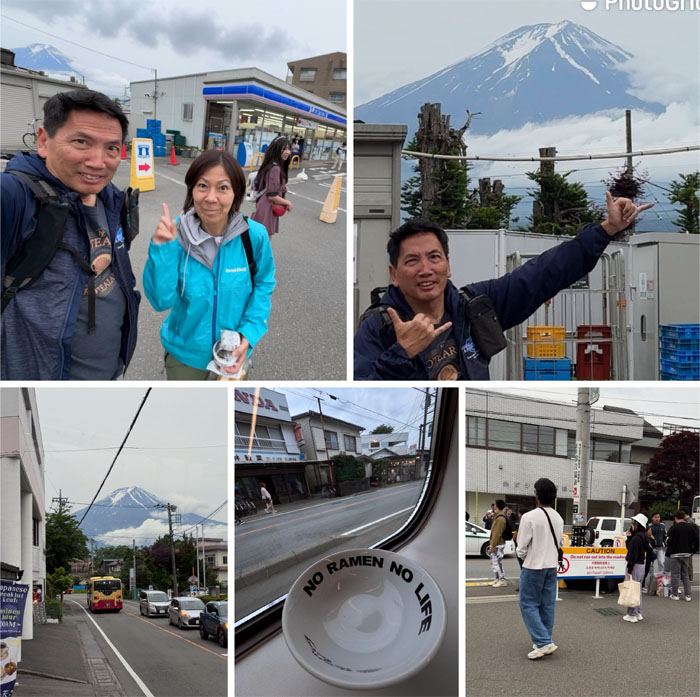
After picking us up, Tada took us to a nearby school parking lot where we were made to don blue coveralls and matching blue helmets. On the ride to the forest, we saw a lot of tourists taking pictures in front of this Lawson convenience store. I was thinking what’s so special about this Lawson? Was this the first Lawson store to open in Japan? Incidentally, that was in 1975 and it was then called Daiei Lawson. In 1979, the name was changed to Lawson Japan. No, this was not the first Lawson store to open in Japan, which was in Osaka. Not the brightest bulb. It would turn on later.

Aokigahara
We soon parked somewhere on the side of the road where Tada explained the lay of the land.
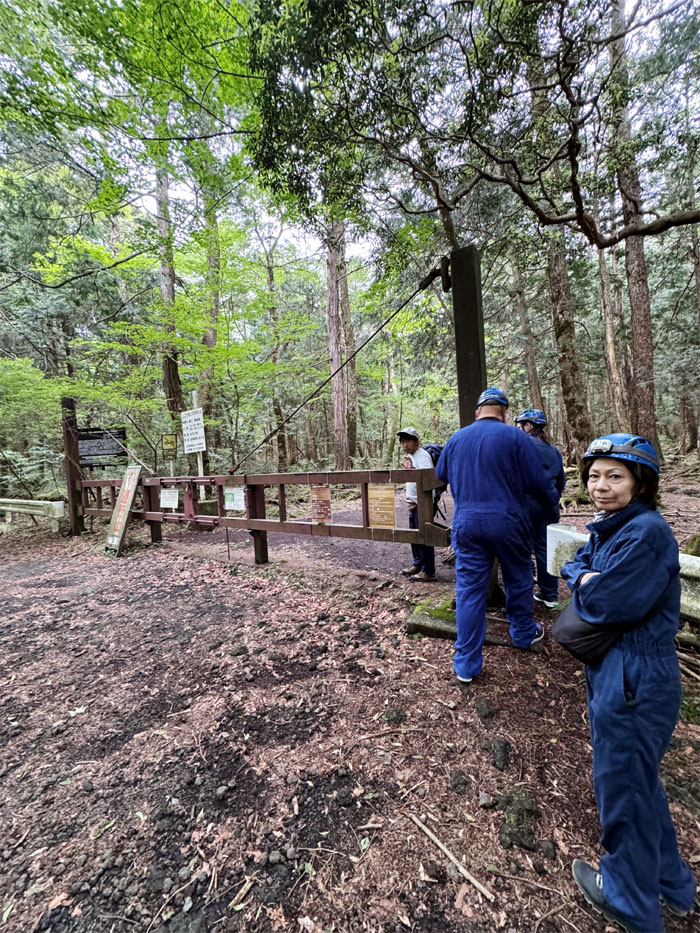
Aokigahara
Following the leader into the forest which has captured the fancy of some in the West due to its reputation as the most popular suicide spot in Japan. In 2003, 105 bodies were found in the forest. The numbers have been declining and authorities have stopped posting numbers to discourage associating the forest with suicide.

Aokigahara
The forest is also known as Sea of Trees which sits on the northwestern flank of Mount Fuji.
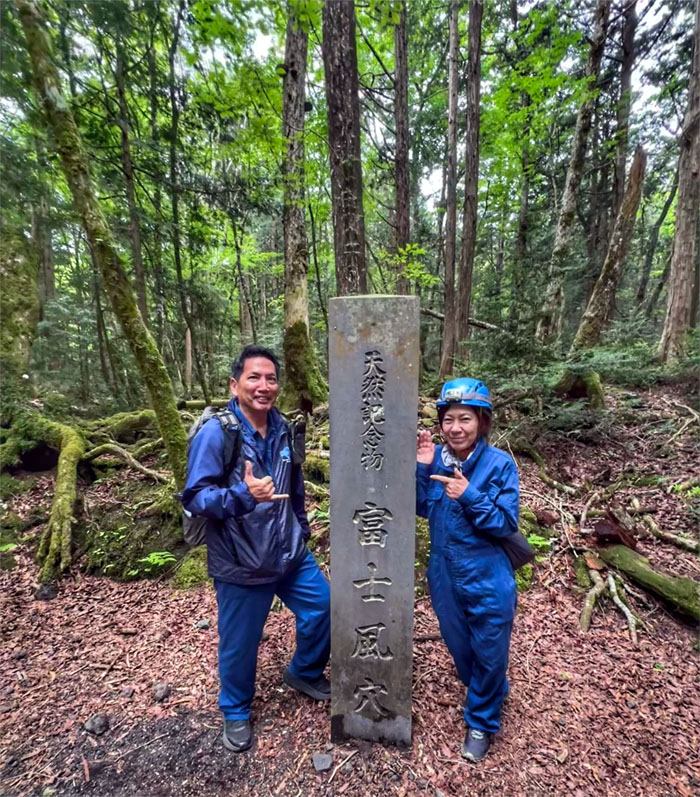
Aokigahara
Standing next to a marker that reads National Monuments of Japan and was designated as such in 1929.
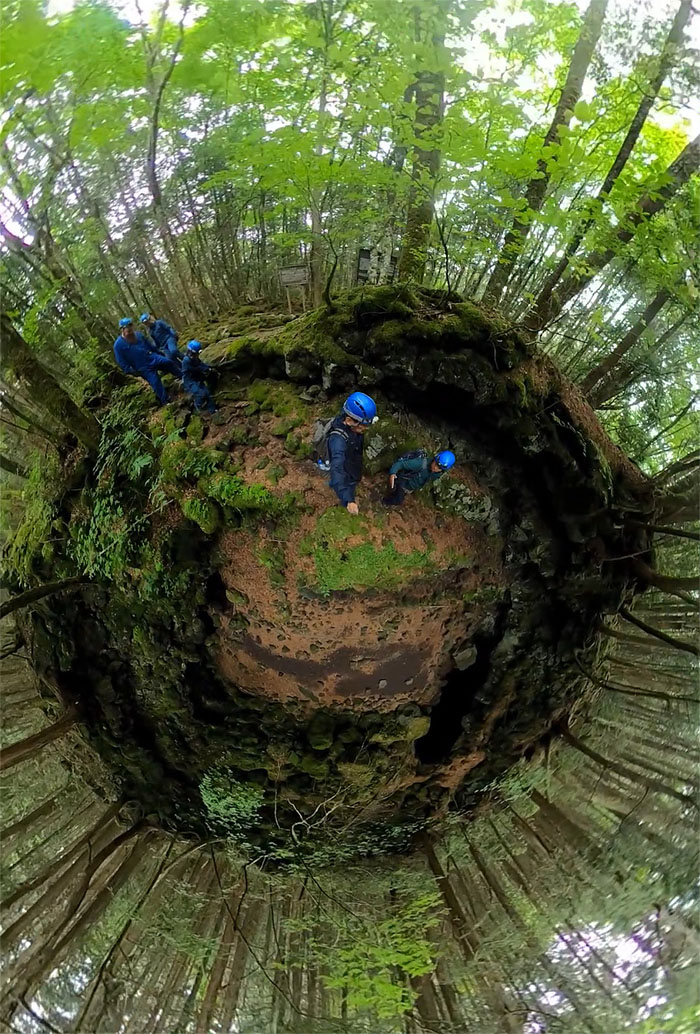
Aokigahara
Making our way down the trail that was somewhat slippery due to the moisture and moss on the rocks.
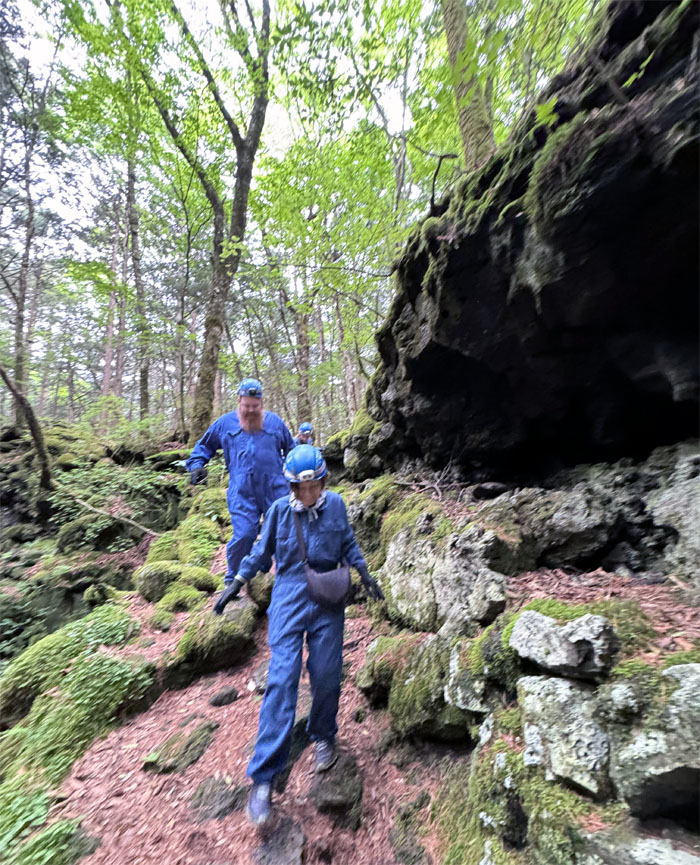
Aokigahara
Passing the spot where the temperature drops a noticeable ten degrees cooler than topside. Instant air conditioning.
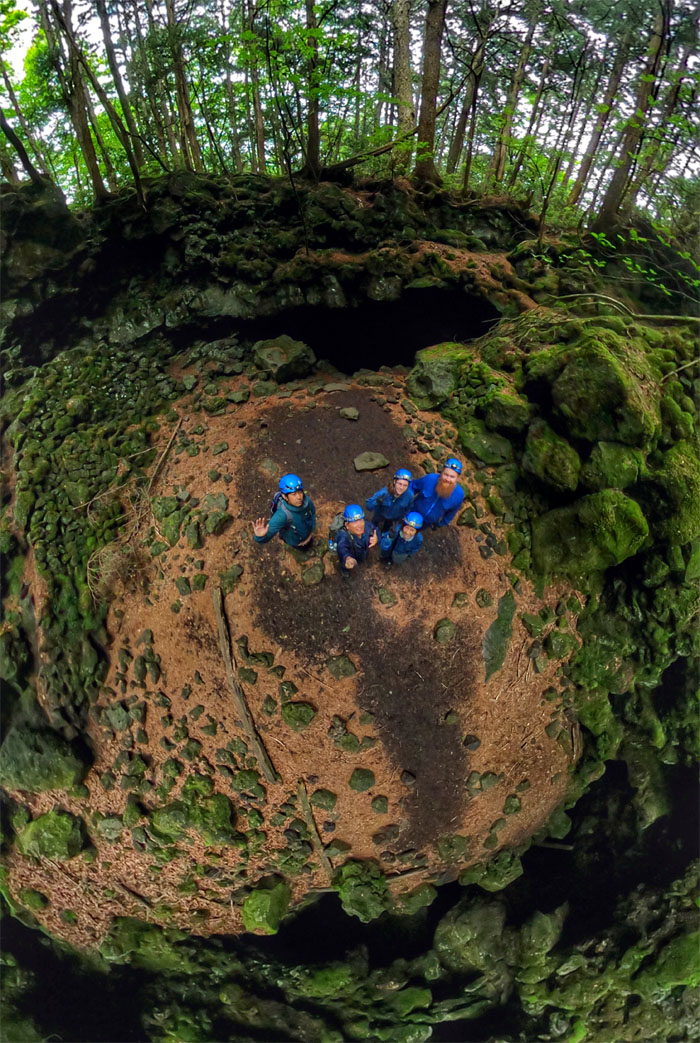
Aokigahara
Group photo in the hole with the five of us.
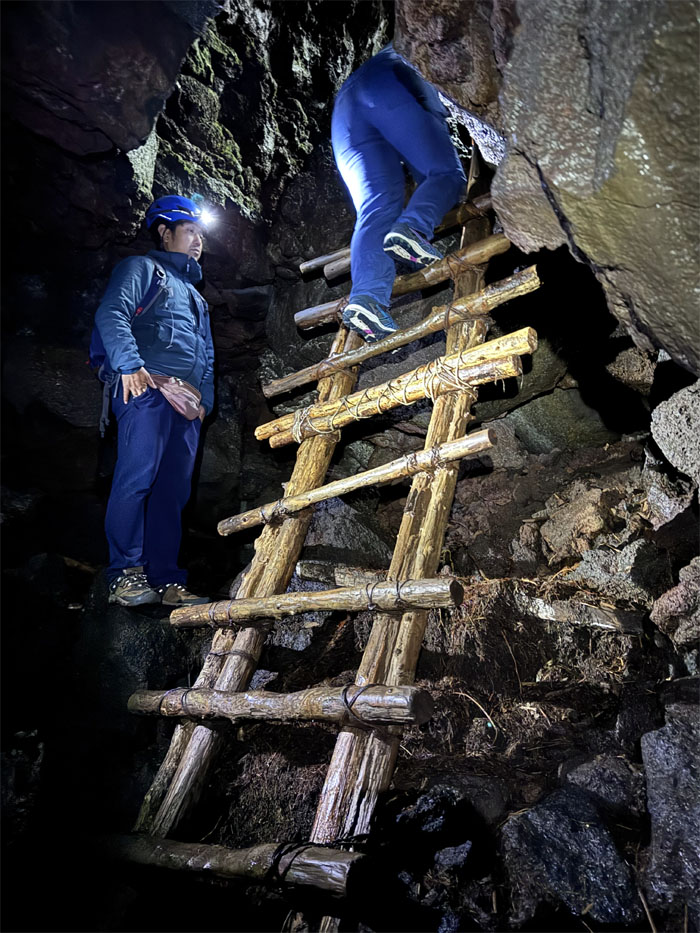
Aokigahara
Climbing down a ladder that was built over 20 years ago by a friend of Tada’s. No worries.
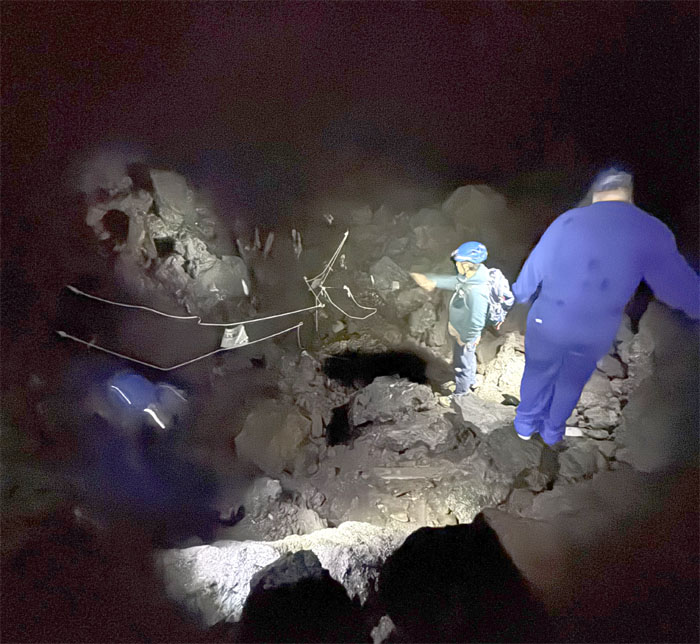
Aokigahara
Entering the lava tube known as the “Wind Cave.”
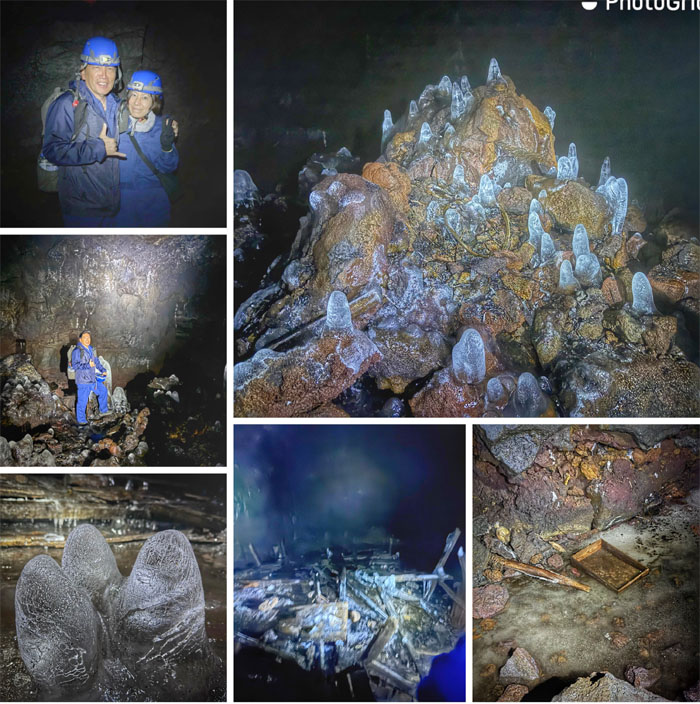
Aokigahara
Tada told us that the ice levels had significantly dropped from the time when he and his friends used to explore these caves as kids over twenty years ago. Global warming perhaps? Wooden debris and remains spoke of the times when the Japanese used to keep silk worm eggs down here from the Edo to the Meiji periods. It’s actually a crime to remove any ice from the caves and could be punished by fines or imprisonment.
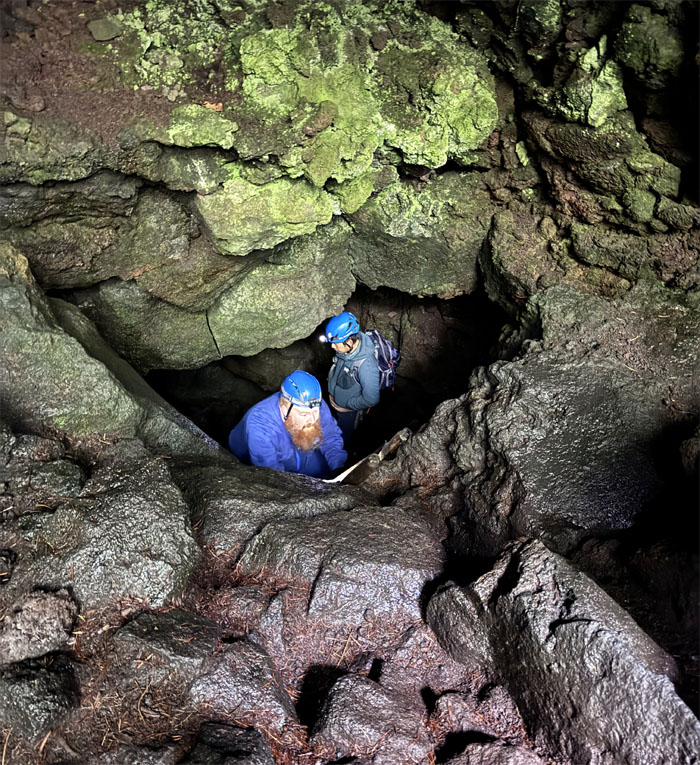
Aokigahara
The Aussie making his way out of the lava tube.
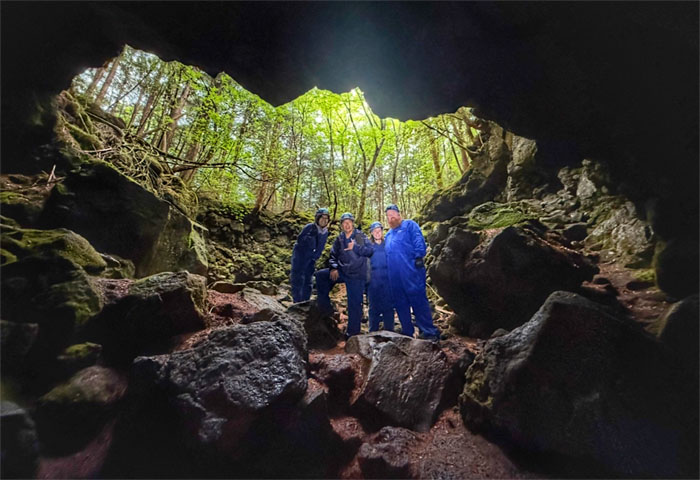
Aokigahara
Group photo framed by the background opening and forest.
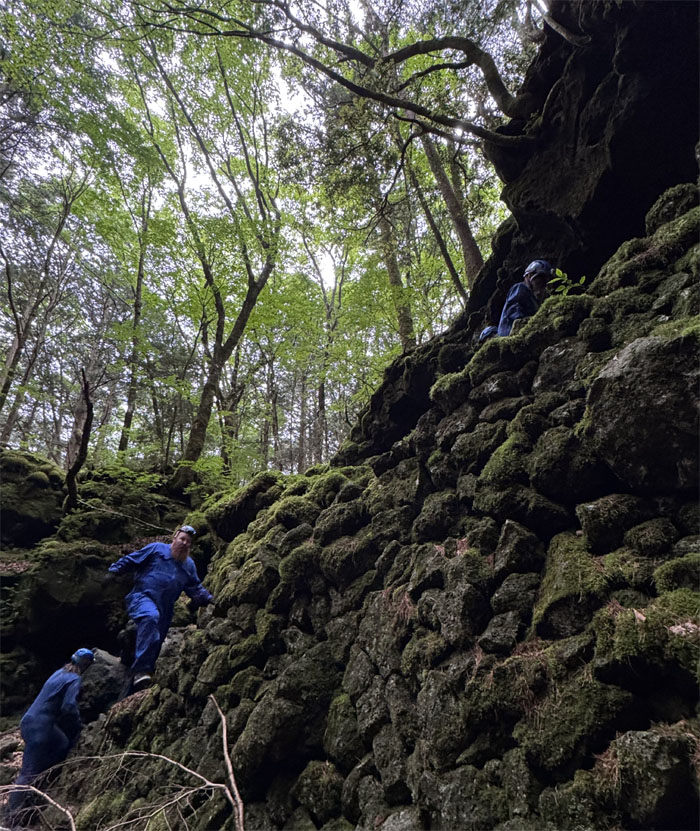
Aokigahara
Climbing our way out of the hole where we left behind the ten degrees of colder temperature.

Aokigahara
Tada blowing his deer mating call to attract any hoofed ruminant ungulates in the area. None answered the call.
Aokigahara
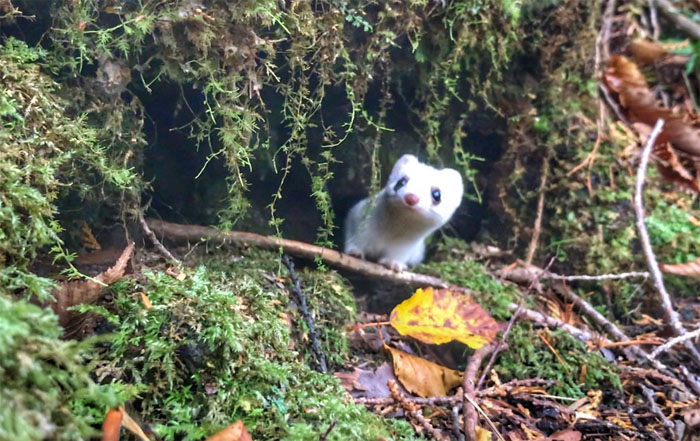
Our guide captured on film, this particular stoat or mountain fairy years ago in this forest. They are carnivores related to the same family of weasels, badgers, otters and wolverines.
Aokigahara
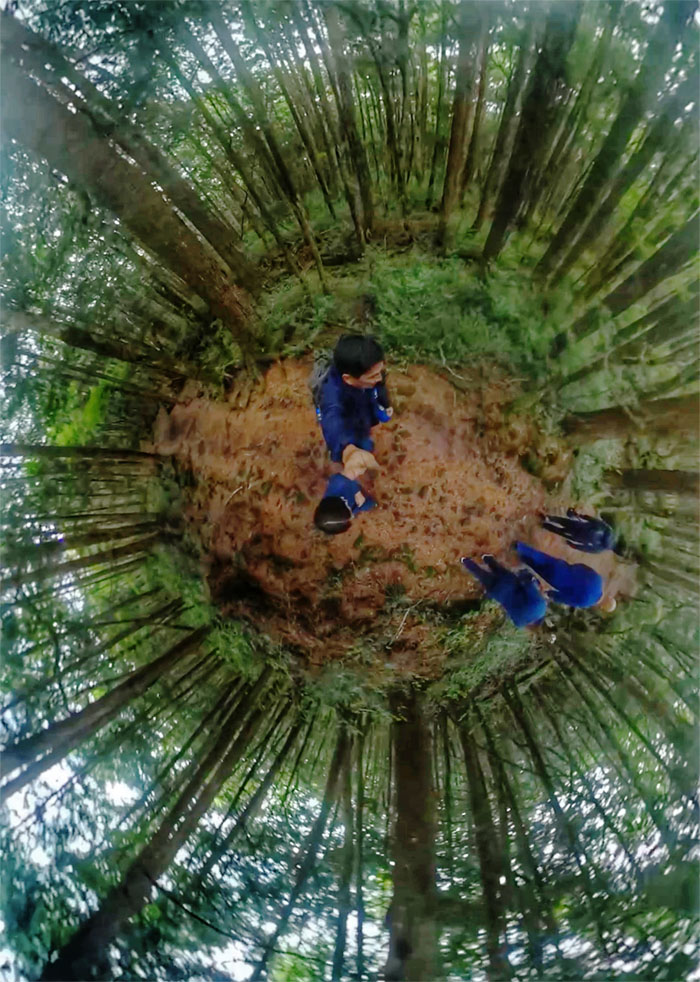
Walking back to our van where we thankfully didn’t encounter any dead people. In 2017, social influencer Logan Paul and friends stumbled upon a person that had committed suicide and uploaded the video where it was met with negative backlash and soon taken down.
Fujikawaguchiko
Our tour which cost us USD113.00 was interesting and informative to the end and Tada then dropped us off back at the station after the conclusion of our short hike. We had time to kill, so we had lunch at a nearby ramen shop and the light bulb finally turned on. Roughly two years ago, social media propelled this particular “konbini” into unwanted international recognition as the “Mount Fuji Lawson.” The clouds had covered the iconic symbol on our way to the ramen shop, but when we were walking back to the station, the clouds cleared up. Clusters of crowds prevented the proper “framing,” so we just snapped a couple shots and took the bus that would take us back to Shinjuku. We ate cheap and tasty sushi standing up for dinner at a spot that is hardly patronized by locals and mostly foreigners.
Metropolitan Area Outer Underground Discharge Channel – June 1, 2025
Our last activity on the trip took us over an hour train ride from Shinjuku to Kasukabe Station. We then caught a taxi to the place informally known as the “The Underground Tunnel” or “G-Cans.”
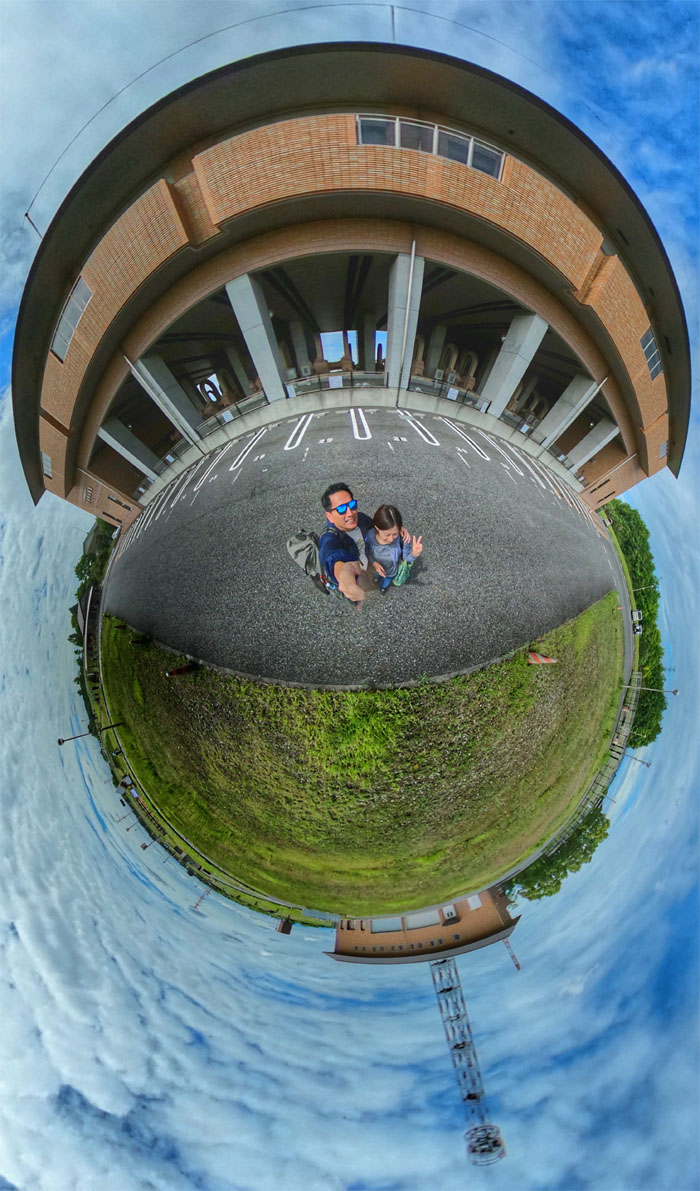
Metropolitan Area Outer Underground Discharge Channel
We had time to kill before the reservation time of 1000, so we snapped a selfie in front of the drainage pump station.
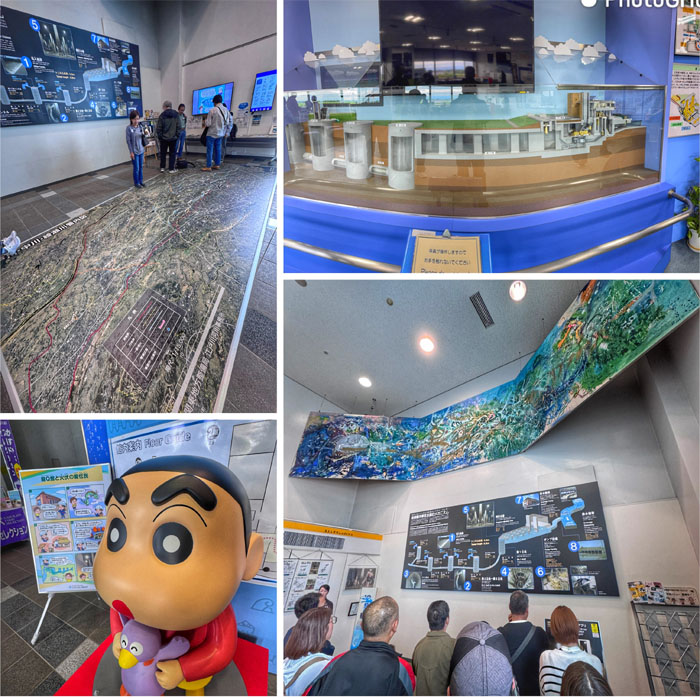
Metropolitan Area Outer Underground Discharge Channel
Checked in and got a briefing in Japanese of the background and history of this place. Alternate language options were available for download.
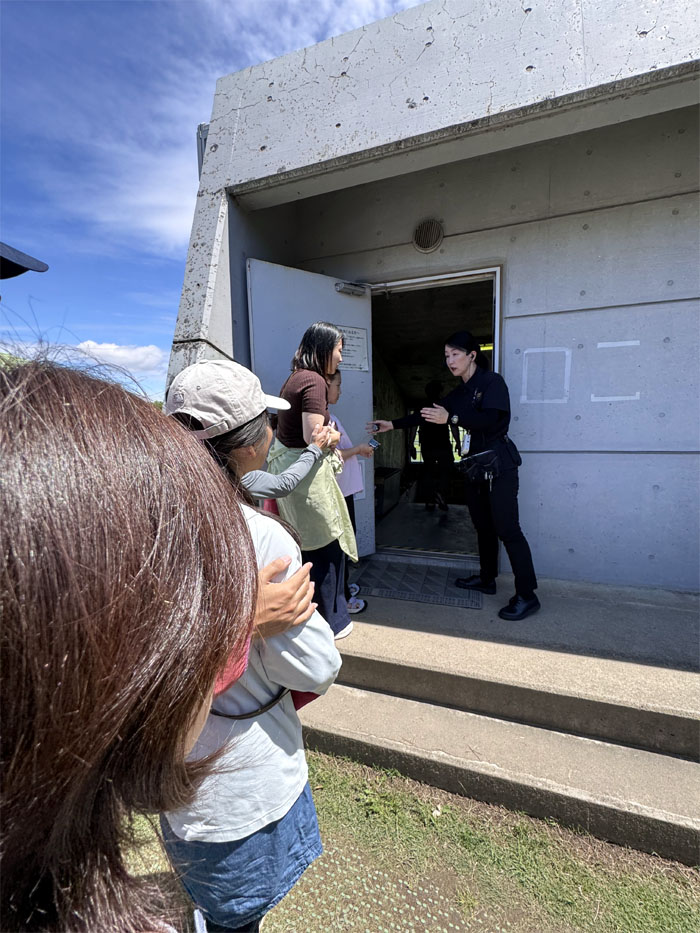
Metropolitan Area Outer Underground Discharge Channel
Walked down the short road to enter through the pressure regulating tank entrance.
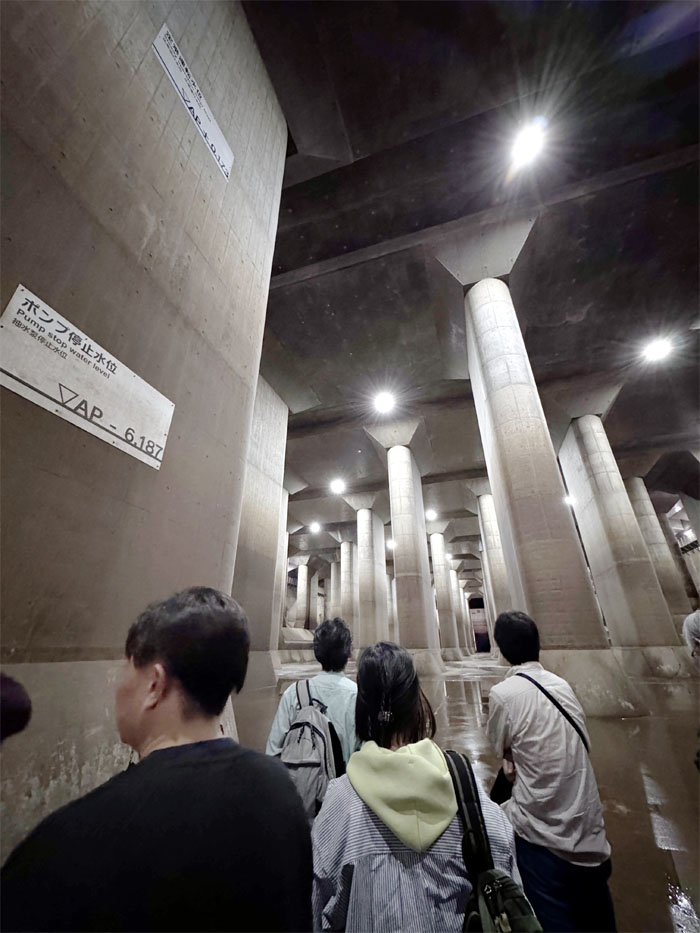
Metropolitan Area Outer Underground Discharge Channel
Stepping foot inside the world’s largest underground flood water diversion facility, this engineering marvel was built from 1993 – 2006 at a cost of roughly 2.6 billion USD.
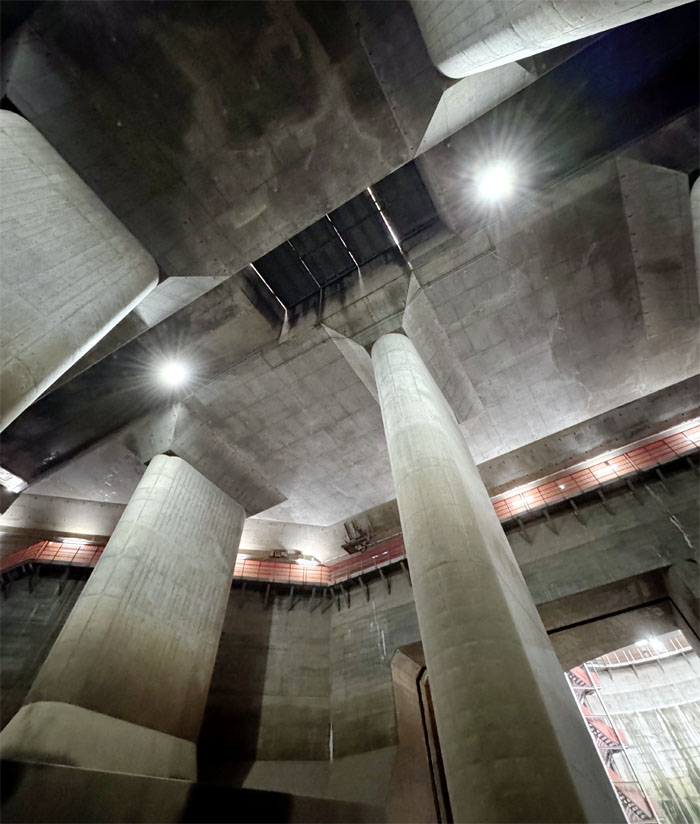
Metropolitan Area Outer Underground Discharge Channel
Looking up to the “skylight.” This is how heavy machinery is lowered to the bottom of the tank …
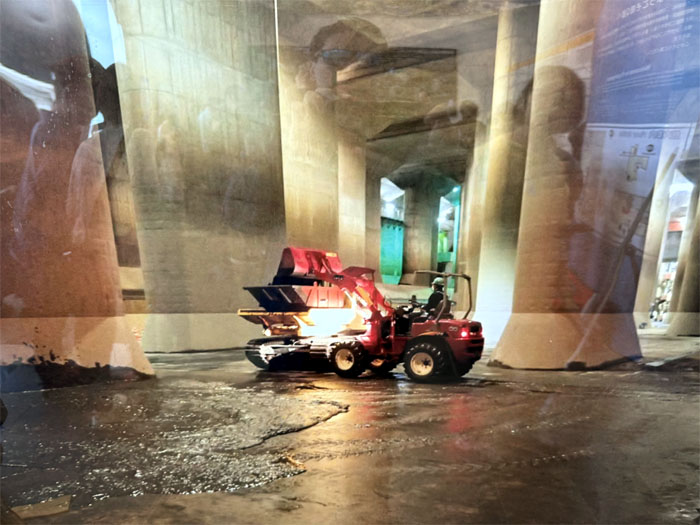
Metropolitan Area Outer Underground Discharge Channel
… to clean up the sediment and debris left when swollen rivers dump their overflow into the tunnels and tanks which the system then manages and regulates the excess water and discharges it in to the Edo River.
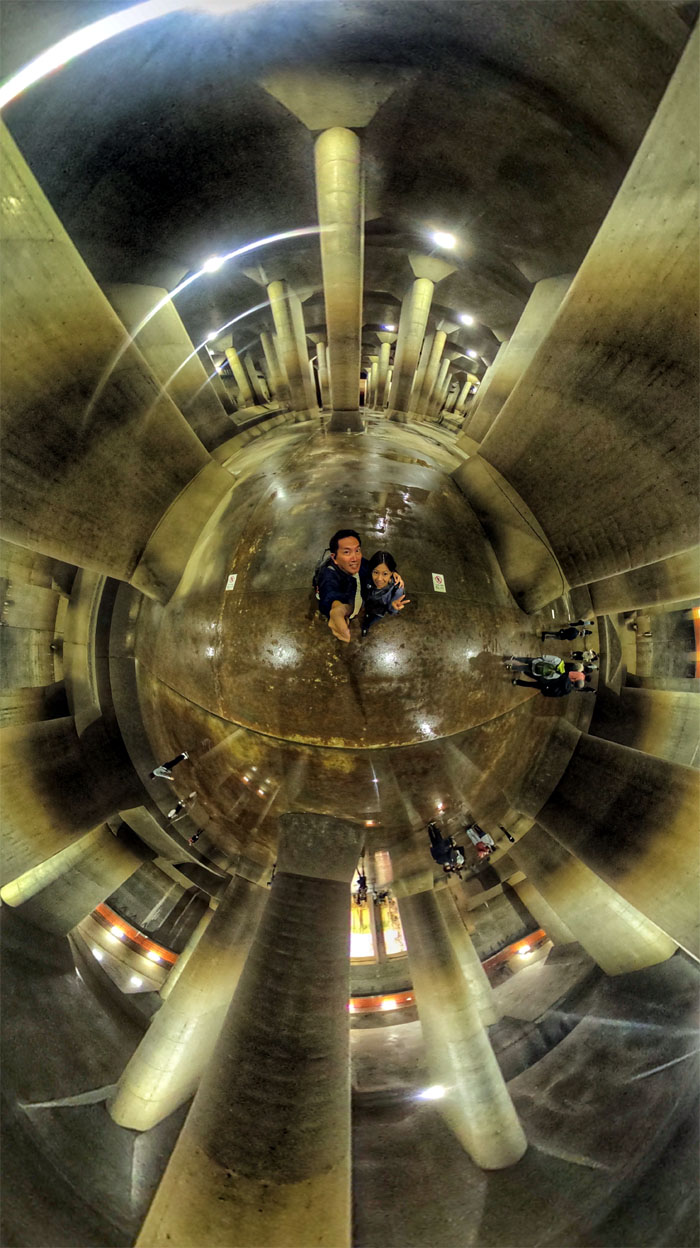
Metropolitan Area Outer Underground Discharge Channel
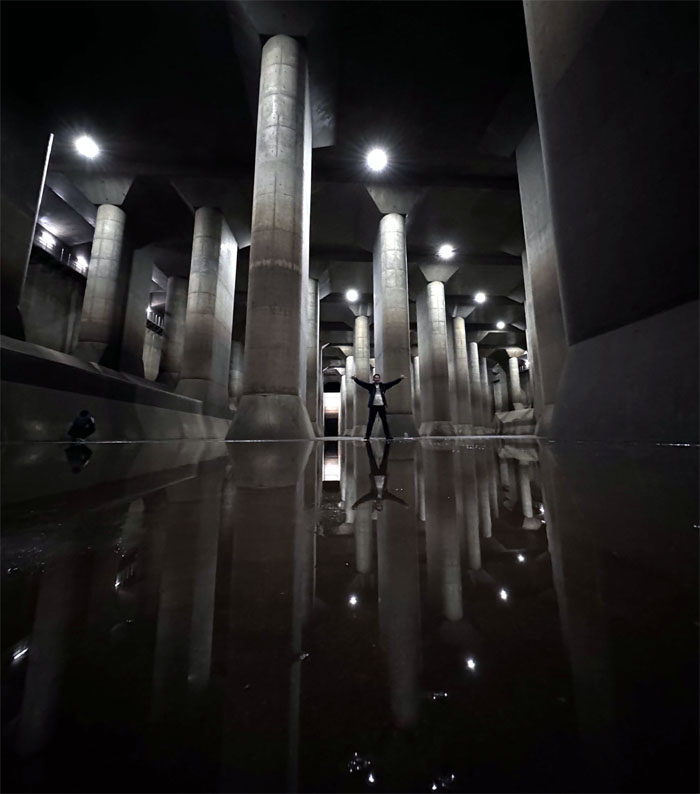
Staying in the shallow end of “The Temple,” as we take our photo in the pressure adjusting tank with its 59 massive pillars.
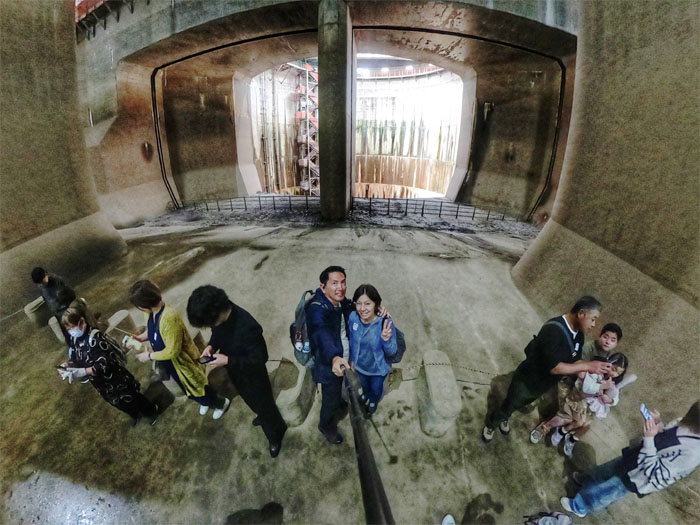
Metropolitan Area Outer Underground Discharge Channel
Photo with one of five concrete shafts in the background that measure an impressive 230′ in height and 100′ in diameter.
Metropolitan Area Outer Underground Discharge Channel
Reflections.
Metropolitan Area Outer Underground Discharge Channel
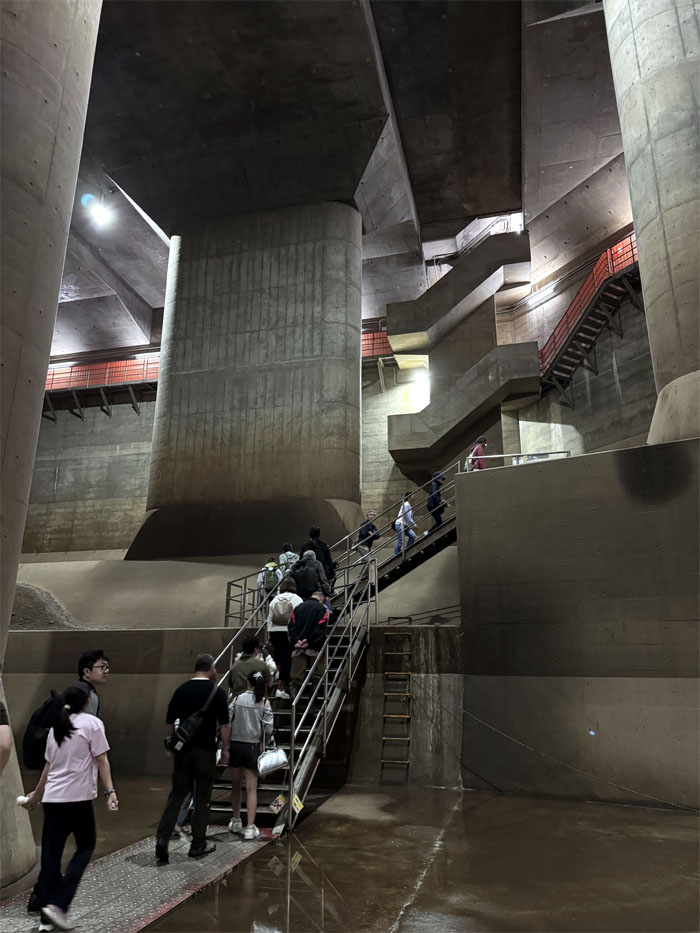
Click counting on our way out of the cavernous facility. This is one place you don’t want to be accidentally left behind.
Metropolitan Area Outer Underground Discharge Channel
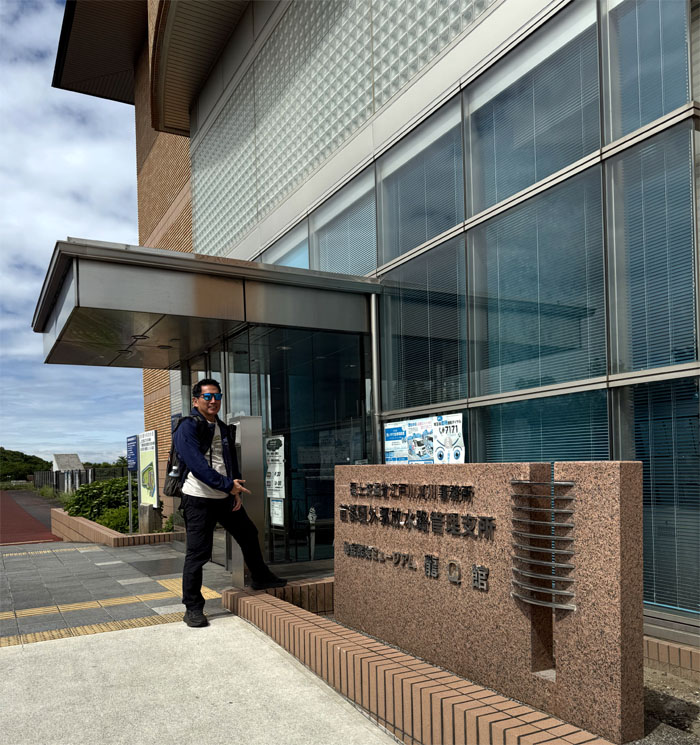
Waiting for our taxi to take us to Minami-Sakurai Station and our train back to Shinjuku. Dinner was grilled chicken skewers in the basement of a department store.
Thanks to Scott Dea for his suggestions on the Agattan and Saitama Tunnels. This wrapped up our trip which included walking around the older town of Asakusa, central Tokyo Station, storied Imperial Palace, historical Ueno, shop to you drop Ginza, working class Jujo, cat and godzilla games in Shibuya, Tokyo night lights and seeing family and friends.
Photos taken by Mari Saito and yours truly. Not necessarily in order.
Note: I have been made aware that some hikers have been using my blog as a hiking guide and getting lost on the trails. Please note that this blog was made to document the hike for the crew(s) that did it. That is why some of my comments will seem to have no relevance or meaning to anybody outside of the crew(s) that hiked that trail. My blog was never meant as a hiking guide, so please do not treat it as such. If you find inspiration and entertainment from these hikes, that is more than enough. If you plan on replicating these hikes, do so in the knowledge that you should do your own research accordingly as trail conditions, access, legalities and so forth are constantly in flux. What was current today is most likely yesterdays news. Please be prepared to accept any risks and responsibilities on your own as you should know your own limitations, experience and abilities before you even set foot on a trail, as even the “simplest” or “easiest” of trails can present potential pitfalls for even the most “experienced” hikers. One should also always let somebody know of your hiking plans in case something doesn’t go as planned, better safe than sorry.

{ 0 comments… add one now }